
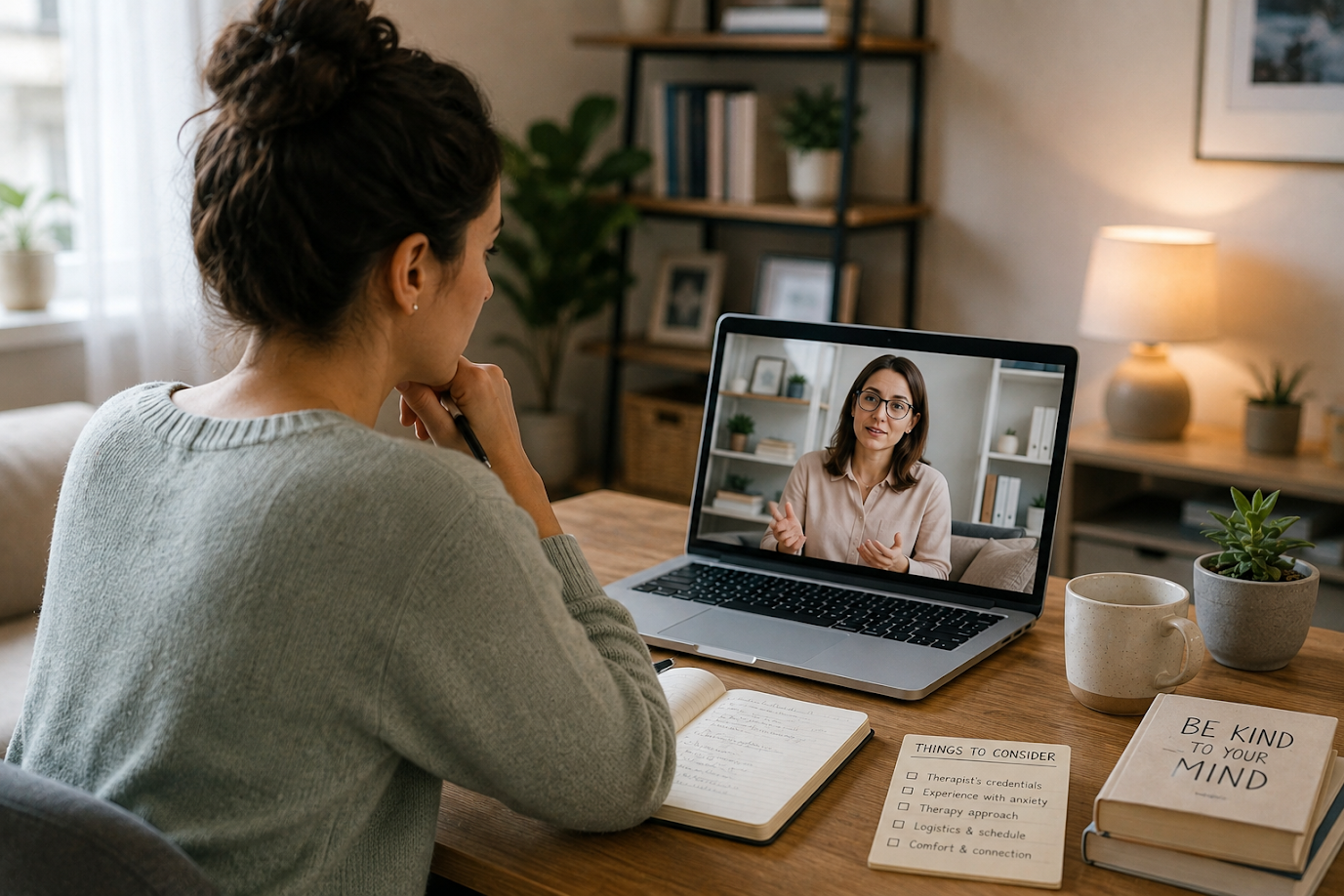
Starting therapy can feel intimidating enough without adding technology into the mix. Do you need a perfectly quiet home office? What if your dog starts barking? What if your kids walk into the room? Is it awkward talking to a therapist through a screen? What happens if your internet cuts out halfway through a session?
These are all reasonable questions.
The good news is that virtual therapy doesn’t require a Pinterest-worthy office, perfect Wi-Fi, or the ability to stare directly into your webcam for an hour. For many people, online therapy is simply a more convenient way to access the same type of professional support they would receive in an office. But if you’ve never done virtual therapy before, it can be helpful to know what to expect.
What Does Virtual Therapy Actually Look Like?
Virtual therapy typically takes place through a secure video platform. At your scheduled appointment time, you’ll log in and meet with your therapist through video. From there, the session may look a lot like traditional therapy. You’ll talk about what’s been happening, identify patterns, learn new strategies, work toward goals, and discuss ways to apply what you’re learning outside of session.
Depending on what you’re working on, therapy may include:
Cognitive Behavioral Therapy (CBT)
Exposure-based therapy
Exposure and Response Prevention (ERP) for OCD
Behavioral strategies
Emotional regulation skills
Executive functioning strategies
Parent involvement
Practical exercises between sessions
Virtual therapy isn’t simply talking to someone on Zoom and hoping you feel better afterward. At least, that’s not how I think therapy should work. A good therapy session should help you better understand what is happening while also giving you opportunities to make changes outside of the therapy hour.
You Don’t Need a Perfect Setup
One of the biggest concerns people have about virtual therapy is where they’re supposed to do it. Ideally, you’ll want to find a private space where you feel comfortable talking openly. But private doesn’t necessarily mean perfect. Some people sit in their home office. Others use a bedroom, a quiet room, or sit in their parked car. The most important things are privacy and minimizing distractions as much as possible.
You don’t need:
A fancy office
A professional microphone
Perfect lighting
A blank background
A perfectly quiet house
Your therapist is there to talk to you, not judge your decorating choices. That said, if you’re constantly worried that someone is listening or you’re repeatedly interrupted, it may be worth thinking about whether there’s a better location for your sessions.
What Happens During the First Session?
The first session is usually different from ongoing therapy. Your therapist will likely spend time getting to know you and understanding why you’re seeking help.
You may discuss:
What brought you to therapy
When your symptoms started
How anxiety affects your daily life
Previous therapy experiences
Relevant family or personal history
What you’ve already tried
What you hope will be different
You don’t need to have your entire life story organized before the first session. You also don’t need to know exactly what’s “wrong.”
It’s okay to say: “I know I’m struggling, but I’m honestly not sure why.” Part of the process can involve figuring that out.
You Don’t Have to Know Exactly What You Need
This is something I wish more people understood before starting therapy. You don’t need to show up knowing:
Your diagnosis
What type of therapy you need
Your treatment goals
Why you’re anxious
Exactly what you want to talk about
Sometimes people spend months researching therapists because they’re afraid of choosing the wrong person or asking for the wrong type of help. But figuring out what you need can be part of the process.
For example, someone may initially seek therapy for anxiety and eventually realize that ADHD-related challenges are contributing to chronic overwhelm. Another person may assume they have generalized anxiety but discover that OCD is playing a larger role. Someone else may struggle socially and assume the problem is simply social anxiety when a lack of confidence or difficulty navigating social situations is also contributing.
This doesn’t mean that therapy should become a guessing game. It means a good therapist should be willing to look at the bigger picture rather than immediately assuming they know the answer.
Virtual Therapy Can Still Be Structured
Some people worry that online therapy will feel less personal or less focused than sitting in an office. But virtual therapy can be just as structured as in person treatment. Depending on your needs, you and your therapist may work toward specific goals and regularly evaluate whether you’re making progress.
For anxiety, those goals might include:
Going places you’ve been avoiding
Reducing reassurance-seeking
Having fewer panic-related behaviors
Spending less time worrying
Returning to school or work activities
Driving again
Participating in social situations
Reducing compulsions
Feeling more confident tolerating uncertainty
You don’t necessarily need a rigid agenda every session. But I do think it’s helpful to understand what you’re working toward. Therapy shouldn’t feel like Groundhog Day, where you’re talking about the same problems every week without knowing whether anything is actually changing.
What If You Have ADHD and Have Trouble Sitting Through Virtual Therapy?
This is a fair concern. Not everyone loves sitting in one place and staring at a screen. And for someone with ADHD, an hour of uninterrupted video conversation may feel particularly challenging. But therapy doesn’t have to look like a job interview.
Depending on the therapist and your needs, sessions can include:
Screen sharing
Written exercises
Visual tools
Movement
Interactive activities
Structured agendas
Breaking larger goals into smaller steps
The format should work for the person, not force the person to adapt to a format that clearly isn’t working. If attention, organization, or executive functioning difficulties are part of what you’re struggling with, those things should be considered rather than ignored.
Can Children and Teens Do Virtual Therapy?
Yes. Virtual therapy can be particularly convenient for families. Parents don’t have to spend additional time driving to appointments, children don’t necessarily have to leave school early, and therapy can take place in a familiar environment.
For children and teens, the format may look different depending on their age and needs. Younger children may need more parent involvement. Teens may appreciate the convenience and privacy of meeting virtually, although it’s still important to make sure they have an appropriate private space.
For children with anxiety, virtual therapy can also allow therapists to better understand what happens in the child’s everyday environment.
Of course, virtual therapy isn’t the best fit for every child. Age, attention span, developmental level, privacy, and the ability to engage through a screen all matter.

What Happens if the Technology Doesn’t Work?
Technology occasionally has a mind of its own. Your internet may freeze. Someone’s audio may stop working. The video platform may decide it needs an update at the exact worst possible moment.
Most therapists have a backup plan for technology problems. This may involve reconnecting to the platform, switching devices, or communicating by phone if appropriate. You don’t need to panic if something goes wrong. Your therapist has almost certainly experienced a frozen screen before. Probably more than once.
Can You Do Exposure Therapy Through Virtual Sessions?
Absolutely!!! This is one area where virtual therapy can actually be particularly useful. Many anxiety triggers don’t happen inside a therapist’s office. They happen in your home, your car, at school, at work, or out in the world. Depending on the situation, virtual therapy can make it easier to connect treatment to real-life situations.
For example, treatment might involve helping someone:
Reduce avoidance
Practice tolerating uncomfortable physical sensations
Resist compulsions
Reduce reassurance-seeking
Gradually approach feared situations
Practice skills in their everyday environment
The goal of exposure-based treatment isn’t for your therapist to hold your hand forever while you do difficult things. The goal is to help you gradually build confidence in your ability to handle discomfort independently.
You May Have to Do Work Between Sessions
This is probably one of the most important things to know about anxiety treatment, whether therapy is virtual or in person. The therapy hour is only one hour. Your anxiety is happening the rest of the week. For therapy to be effective, you will need to practice things outside of session.
That could mean:
Approaching something you’ve been avoiding
Reducing a safety behavior
Practicing a new coping strategy
Tracking a pattern
Completing an exposure exercise
Not asking for reassurance
Trying a different response when anxiety shows up
This doesn’t mean you’ll be overwhelmed with homework. But meaningful change usually requires more than insight. You can understand exactly why you’re anxious and still continue doing the same things that keep anxiety going. At some point, therapy needs to translate into real life.
It’s Okay if Virtual Therapy Feels Weird at First
Talking to someone through a screen may feel awkward initially. So might therapy in general. You may not know where to look. You may wonder if the therapist can tell you’re reading notes off-screen. You may be overly aware of your own face sitting in the corner of the screen.
Eventually, most people adjust. And many people end up appreciating the convenience of being able to finish a session and immediately continue with their day rather than sitting in traffic.
The Bottom Line
You don’t need a perfect home office, a perfectly quiet life, or a perfectly organized explanation of why you’re seeking therapy to start virtual treatment. What you do need is a private enough space, reliable technology, and a willingness to show up and engage in the process. Virtual therapy can provide flexibility and access to specialized care while still allowing for meaningful, structured treatment. And just like in-person therapy, the goal isn’t simply to talk about anxiety.
The goal is to understand what’s keeping you stuck and begin making changes that actually carry over into your everyday life.
Looking for Virtual Therapy for Anxiety or OCD?
I provide virtual therapy for children, teens, and adults throughout Connecticut and New York. My approach includes evidence-based treatment for anxiety and OCD, including CBT, exposure-based therapy, and ERP.
I also understand that anxiety doesn’t always exist in isolation. ADHD-related challenges, social difficulties, executive functioning struggles, and other underlying factors can sometimes play an important role in why someone is feeling anxious in the first place.
If you’re unsure whether therapy is the right next step, or you’re trying to figure out what type of support may make the most sense, my Care Navigation consultations can help individuals and families organize their questions and explore possible next steps.
Your cheerleader,
Andrea